
What nanotechnology is and why it matters for ecology
Nanotechnology is the engineering of matter at the scale of atoms and molecules — typically in the range of one to one hundred nanometres. At this scale, materials often exhibit properties that are different from their bulk equivalents: higher strength, greater surface area relative to volume, different optical and thermal behaviour, and enhanced chemical reactivity. These properties open applications that are not available with conventional materials.
The ecological relevance of nanotechnology is broad. Nanomaterials appear in solar cell components, water filtration membranes, building insulation products, pollution remediation systems, agricultural inputs and packaging materials. In each case, the specific properties of nanoscale materials either improve performance relative to conventional alternatives, reduce the quantity of material needed, or enable processes that are not otherwise feasible.
For anyone engaged in green building, sustainable agriculture or environmental remediation in Israel, nanotechnology is not a distant laboratory curiosity. It is already present in products available from local suppliers — in self-cleaning glass coatings, high-performance insulation panels, filtration membranes for water treatment systems and photovoltaic cell components. Understanding what it is and how it works supports better procurement decisions.
Green applications: solar, water and buildings
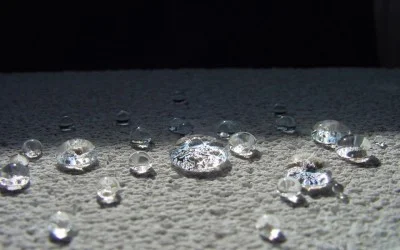
In solar energy, nanotechnology is contributing to improved photovoltaic cell efficiency through quantum dot solar cells, nanoscale light-trapping structures and nano-coatings that reduce reflection losses. Self-cleaning nano-coatings on solar panel glass maintain output in dusty environments — particularly relevant in Israel's south, where desert dust reduces panel output significantly if not managed. These coatings use photocatalytic nanoparticles that break down organic deposits when exposed to ultraviolet light.
Water filtration is one of the most advanced application areas for nanotechnology. Nano-filtration membranes remove contaminants — including heavy metals, pesticides, pharmaceuticals and pathogens — more selectively and at lower pressure than conventional reverse osmosis systems, reducing energy consumption per litre treated. In Israel's context, where water quality management is a national priority and desalination is a major energy consumer, efficiency improvements in filtration membranes have direct significance.
In building materials, aerogel insulation — composed of a nano-scale silica structure that is more than 95% air — provides thermal resistance values per unit thickness that are significantly higher than conventional insulation. This is particularly valuable for retrofitting older Israeli buildings where wall thickness is fixed and adding conventional insulation would intrude significantly on interior space. Nano-insulation products are available in Israel but remain more expensive than conventional alternatives.
Pollution remediation and agricultural applications
Nano-scale particles of certain materials — iron, titanium dioxide, zero-valent metals — can break down or neutralise pollutants in soil and groundwater through catalytic and reactive processes. This approach to contaminated site remediation can be more effective, faster and less disruptive than conventional excavation and treatment methods, and is being studied for application to industrial contamination sites.
In agriculture, nanomaterials are being developed as carriers for controlled-release fertilisers and pesticides. By encapsulating active compounds in nano-scale carriers, delivery can be timed to match crop needs more precisely, reducing the quantities applied and the proportion that leaches into groundwater. For Israel's intensive agricultural sector, which faces strict regulations on groundwater contamination, precision nutrient delivery is a commercially and environmentally relevant development.
Carbon-based nanomaterials — carbon nanotubes and graphene — are being incorporated into lightweight composite materials for construction and transport applications. Their exceptional strength-to-weight ratio allows structures that use less material for the same performance, with direct implications for embodied carbon in buildings and vehicles.
Risks and responsible evaluation
The same properties that make nanoparticles useful — small size, large surface area relative to volume, and high reactivity — also raise questions about their behaviour in biological systems and the natural environment. Nanoparticles can penetrate biological membranes more readily than larger particles of the same material. Some nanoparticles have been shown in laboratory studies to exhibit toxicity to cells or organisms that the same material in bulk form does not.
The scientific picture is incomplete and evolving. Different nanoparticles have different properties and different risk profiles; generalising from studies of one material to conclusions about all nanomaterials is not scientifically valid. Regulatory frameworks in Israel and the European Union are developing guidelines for nanoparticle safety assessment, but the field is moving faster than regulation in many areas.
Responsible engagement with nanotechnology means applying the precautionary principle without refusing all engagement. Products with established safety records and independent certification from recognised bodies are different from experimental materials with limited testing. For buildings and food systems — contexts where human exposure is ongoing — the burden of proof for safety should be high, and preference should go to nanomaterials with longer track records in comparable applications.
What this means for practical decisions in Israel
For individuals and businesses making procurement decisions in Israel, the practical implications of nanotechnology are manageable. When considering a product that incorporates nanomaterials — whether a solar coating, an insulation panel or a water filter — ask the supplier to specify what nanomaterials are present, what safety testing they have undergone and what end-of-life considerations apply.
Products from established European or North American manufacturers that carry CE or equivalent certification have typically been through more rigorous safety evaluation than products from newer or less regulated supply chains. This is a useful proxy in the absence of comprehensive product-specific safety data.
Israel's scientific community, including researchers at the Weizmann Institute, Technion and Hebrew University, is active in nanotechnology research — both applications and risk assessment. The research output from these institutions provides a locally grounded evidence base for understanding nanotechnology's ecological impacts. Green Solutions follows these developments and prioritises applications with established safety records and documented ecological benefits over novelty alone.
Related Articles

How Industrial Hemp Is Replacing Petroleum Plastic
Hemp-based bio-composites offer engineers a stronger, lighter and fully biodegradable alternative to conventional plasti…

Behind the Fibres: Banana Tree Waste Becomes Clothing
How agricultural waste from banana plantations is processed into a soft, durable and biodegradable textile — and what th…
Green Technology: Useful Innovation, Not Just New Gadgets
How to evaluate environmental technologies by real-world impact, durability and maintainability — with a focus on what w…