
Why composting matters in an Israeli household
An Israeli household generates roughly 30–40% of its waste as organic material — fruit and vegetable scraps, coffee grounds, eggshells, bread, garden trimmings. When this material goes to landfill it decomposes without oxygen, producing methane and contributing to groundwater contamination. When composted at home it becomes a stable, nutrient-rich amendment that improves soil structure and reduces the need for purchased fertiliser.
For households connected to municipal organic collection, the bin is the right first step. For households with even a small garden or balcony, a home compost bin provides the added benefit of closing the nutrient loop entirely — food scraps become food-growing capacity on site.
The biology of a working pile
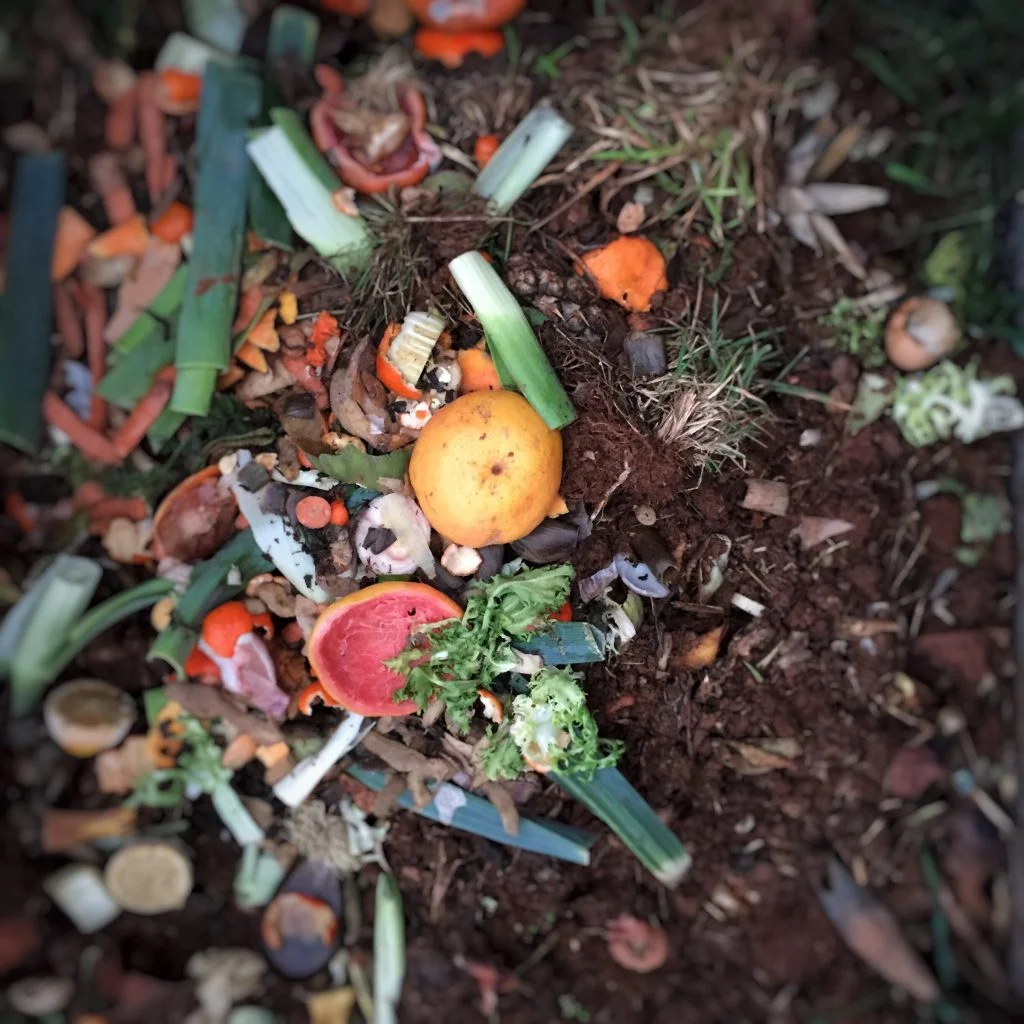
Composting is microbial work. Bacteria, fungi and invertebrates break down organic material into stable humus. They need four things: carbon, nitrogen, moisture and air. Carbon comes from dry brown materials — cardboard, dry leaves, straw, paper bags. Nitrogen comes from green materials — food scraps, fresh grass clippings, garden prunings.
A rough ratio of two to three parts brown to one part green by volume keeps the pile active without producing odour. A pile that smells bad is usually too wet or too high in nitrogen. A pile that does nothing is usually too dry or too high in carbon. Both problems are easy to correct.
Setting up and managing your bin
A simple compost bin can be a wooden frame, a plastic drum with air holes or a purchased unit. Position it on bare soil if possible, so worms and soil organisms can enter from below. Add a thin layer of brown material as a base, then alternate greens and browns as material becomes available.
Keep the pile as moist as a wrung-out sponge. In Israel's dry climate, watering during summer may be necessary. Turn the pile weekly with a fork or aeration tool to introduce oxygen. In warm conditions, finished compost can be ready in eight to twelve weeks.
What to add and what to avoid
Safe to add: fruit and vegetable scraps, coffee grounds and filters, tea bags (without staples), eggshells, bread and grains in small quantities, grass clippings, dry leaves, shredded cardboard and paper, garden prunings. These materials break down reliably without attracting pests.
Avoid adding: meat, fish, dairy, cooked food with oil or sauce, pet waste, treated wood, diseased plants. These materials either attract vermin, introduce pathogens or contain compounds that do not break down safely. If dealing with cooked food waste, a bokashi fermentation system is a practical alternative that handles it anaerobically before the material is added to soil.
Options for apartment dwellers
No garden is not a barrier. Vermicomposting — using a worm bin — works efficiently on a kitchen counter or balcony. A well-managed worm bin produces liquid fertiliser as a by-product and handles most food scraps with no odour if the moisture balance is maintained.
Electric composters are now widely available and can process food waste including cooked food into a dry material in a matter of hours. The output is not finished compost but a material that can be added to soil where it will continue to break down. For dense urban households, these units solve the food-waste problem without requiring outdoor space or patience.
Community composting sites — shared bins in apartment building courtyards, public parks or community gardens — are a growing option in Israeli cities. Residents without personal outdoor space can contribute scraps to a shared pile managed by a volunteer coordinator or local authority, turning building-level organic waste into communal garden compost.
Related Articles
Recycling, Composting and the Move Toward Less Waste
How Israel's waste systems work, what you can actually recycle, and practical steps to reduce household landfill contrib…

Five Practical Uses for Fireplace Ash
Wood ash from fireplaces and stoves is rich in minerals and has practical uses in the garden, home and workshop — keepin…