
The case against chlorine
Conventional swimming pools depend on a continuous chemical regime. Chlorine is the most common disinfectant, but it reacts with organic matter — sunscreen, sweat, hair — to form chloramines and other disinfection by-products that irritate eyes and skin, produce the characteristic pool smell and have been associated in repeated studies with respiratory issues in frequent swimmers. Salt pools reduce some of these effects but still generate chlorine through electrolysis and carry their own chemical management requirements.
The environmental cost of a conventional pool extends beyond the water it contains. Pool chemicals require production, packaging and careful handling. Backwash water discharged from filter cleaning carries chemical residues. The volume of fresh water needed to maintain a pool through evaporation and backwashing in a hot Israeli summer is substantial — in some climates and seasons, a private pool can lose 20 to 40 percent of its volume to evaporation over the course of the summer.
How biological filtration works
An ecological pool replaces chemical treatment with a biological filtration zone — a planted area containing aquatic plants, gravel substrate and a community of microorganisms that break down contaminants naturally. Water is circulated from the swimming zone through this planted zone continuously, returning clean without the use of any disinfectants. The biological community in the filtration zone — bacteria, algae, invertebrates and plant root systems — functions in much the same way as a healthy stream or pond.
The two zones — swimming and filtration — are physically separated by a submerged wall or weir that allows water to circulate freely but keeps the planted zone visually distinct from the swimming area. The filtration zone typically occupies between 30 and 50 percent of the total water surface area, though designs vary. Some pools combine substrate filtration with floating plant islands, which allow a larger swimming zone without expanding the total footprint.
Water quality and clarity
A well-established ecological pool maintains water clarity comparable to a conventional pool, without chemical odour and with a softer feel on skin and hair. The key is achieving biological equilibrium — a balance between the nutrient load entering the water (from swimmers, leaves and rainfall) and the filtration capacity of the planted zone. This balance takes one to two seasons to establish fully in a new pool; during this period some turbidity or algae growth is normal and expected.
Once established, the biological system is self-regulating. It does not need weekly chemical checks, pH adjustment or chlorine additions. Seasonal maintenance — trimming back overgrown aquatic plants in autumn, removing excess silt from the substrate every few years — is the main ongoing task. Many owners report spending less time on pool maintenance with an ecological system than they did with a conventional one.
Ecological pools in the Israeli climate
Israel's Mediterranean climate — hot dry summers, mild wet winters — presents specific conditions for ecological pool design. The long, intense summer increases evaporation and places high demand on the pool for recreation. The warm water temperatures accelerate biological activity in the filtration zone, which is generally beneficial, but also favour algae growth if the plant-to-water ratio is not designed correctly.
Native and regional aquatic plants are the best choice for the filtration zone in Israeli conditions. Plants that are adapted to hot summers and low winter temperatures — rushes, reeds, water irises and selected floating-leaf plants — establish quickly and provide robust filtration. Non-native ornamental aquatics may struggle with Israeli summer temperatures or, conversely, may spread aggressively in the local environment. A designer with local experience is valuable here.
Biodiversity and landscape value
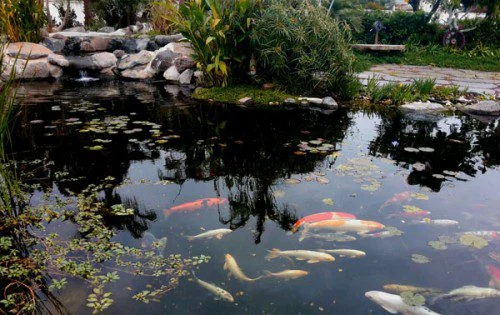
An ecological pool is more than a swimming facility. As a water body in the landscape, it attracts dragonflies, frogs, birds and beneficial insects within one or two seasons of establishment. The planted filtration zone provides habitat for pollinator species and creates a visual feature that integrates naturally with garden planting in a way a conventional pool cannot. In urban and suburban environments where natural water bodies are rare, even a small ecological pool functions as a meaningful biodiversity node.
Water surfaces also affect local microclimate. Through evaporation, an open water feature cools the surrounding air — measurably so on a hot day. In a garden where outdoor comfort in summer is a priority, the combination of shade planting, water surface and ecological pool can create genuinely cooler conditions in the immediate vicinity compared with a paved or hard-landscaped alternative.
What to consider before building
Ecological pools require more surface area than a conventional pool of equivalent swimming volume, because space must be allocated to the filtration zone. A minimum total water surface of approximately 30 to 40 square metres is generally recommended for a functional system; smaller installations are possible with more intensive filtration design but require more careful management. The total water volume, pump sizing, plant selection and zone ratio should all be calculated by a designer who has built and observed working ecological pools through multiple seasons.
Planning permission requirements in Israel vary by municipality and by whether the pool is being newly constructed or converted from a conventional pool. Conversion from a conventional pool to an ecological one is technically straightforward in most cases — the shell remains, the filtration zone is added alongside it and the chemical dosing system is decommissioned — but the added surface area may require permits depending on the site. Getting this question answered before starting design work avoids complications later.
Related Articles
Ecological Garden Ponds: Creating a Microclimate at Home
A garden pond cools surrounding air through evaporation, supports pollinators and frogs, and filters rainwater runoff — …
Greywater Recycling at Home: Save Water and Money
Shower, sink and laundry water — about 50–60% of household output — can legally irrigate your garden in Israel under Sta…
Green Building: Smarter Homes That Cost Less to Run
How insulation, passive solar design, water efficiency and smart materials create buildings that are healthier, cheaper …