
Why grow together?
Community agriculture covers a range of models — shared allotments, community-supported agriculture (CSA) subscription schemes, food co-operatives and urban farm collectives — but they share a core purpose: reconnecting people with the source of their food and reducing the social and environmental distance between producer and consumer. In Israel, where the agricultural sector is sophisticated and most urban residents purchase food through supermarkets with supply chains that span multiple countries, this connection has become attenuated over several generations.
Growing food together in shared spaces restores what supermarket supply chains cannot provide: the knowledge of when things grow, what they look like before they are packaged, how much labour they require and how season and weather affect what is available. These are not trivial pieces of knowledge — they inform purchasing choices, reduce food waste and build the kind of food literacy that improves decision-making at every level from household to policy.
Community-supported agriculture: sharing risk and harvest
The CSA model works by asking members to pay a seasonal subscription at the start of the growing season, before the harvest begins. This upfront payment provides the farm with working capital and a committed market; members in return receive a regular box of fresh produce throughout the season, sharing in both the abundance of good weeks and the shortfalls of difficult ones. The risk — weather, pest pressure, crop failure — is distributed across the membership rather than absorbed entirely by the farmer.
CSA schemes exist in varying forms across Israel, connecting urban households directly with small-scale mixed farms, often in the coastal plains, Galilee and Judean foothills. Members typically collect from a local pick-up point or receive home delivery. The produce is seasonal and unadulterated by the post-harvest treatments applied to supermarket produce — no waxing, no modified atmosphere packaging — and is in most cases harvested to order rather than days or weeks in advance.
Urban allotments and community gardens
Community garden plots — small allotments managed by individual families or groups within a larger shared site — are increasingly available in Israeli cities through municipal land allocation programmes, non-profit organisations and property owners who make unused land available. In Tel Aviv, Be'er Sheva, Haifa and other urban centres, community gardens have converted vacant lots, rooftops and underused public spaces into productive, socially active growing sites.
For urban residents without private garden access, an allotment plot offers not only fresh produce but outdoor space for physical activity and a social connection that high-density urban living rarely provides organically. The waiting lists for plots in established community gardens in Israeli cities reflect unmet demand that has grown alongside urban densification in recent years.
Food co-operatives: pooling buying power
A food co-operative pools the purchasing power of its members to buy directly from producers — typically small farms, artisanal dairies, fisheries and other local food businesses — at prices that reflect a fair return to the producer and a genuine saving to the buyer by eliminating the retail margin. Unlike supermarket supply chains that prioritise uniformity, long shelf life and year-round availability regardless of season, food co-ops typically work with seasonal produce from specific identified producers.
Operating a food co-op requires member commitment. Most function on a rotating volunteer basis — members contribute a few hours per month to ordering, receiving, sorting and distributing the collective purchase. This contribution is part of the model: it builds familiarity with the food, the producers and the other members, creating social infrastructure alongside the supply chain. Urban food co-ops in Israel have demonstrated that the model works at neighbourhood scale with groups of 30 to 100 households.
Food resilience — a practical benefit, not just an idea
Food resilience — the capacity of a community to feed itself when normal supply chains are disrupted — has moved from a theoretical concept to a practical concern following various supply disruptions in recent years. Communities with established growing infrastructure, direct producer relationships and shared food knowledge are demonstrably better positioned to adapt to shortfalls than those dependent entirely on supermarket supply chains.
Israel's geography and security context give food resilience particular relevance beyond the general global discussion. Local production capacity, community food networks and practical growing knowledge represent a form of local security insurance. This is not an argument for self-sufficiency — modern food systems are irreducibly interconnected — but for supplementing that interconnection with meaningful local capacity.
Starting or joining a community growing project
For those interested in joining an existing community agriculture project, municipal councils, environmental NGOs and neighbourhood associations are the most useful starting points for finding established schemes. National organisations working in urban agriculture and community food systems maintain directories of active projects. CSA farms typically advertise seasonal subscription openings on social media and through local environmental networks.
For those interested in starting a project — establishing a community garden on underused land, forming a buying group or connecting neighbours who want to grow together — the most practical first step is identifying a few other committed people before approaching landowners, municipalities or suppliers. Community food projects succeed when they begin with people who are genuinely committed to the ongoing work, not just the idea. Starting small, proving the model, and expanding when the community around it has grown is consistently more successful than ambitious launches that exceed the capacity of early participants to sustain.
Related Articles
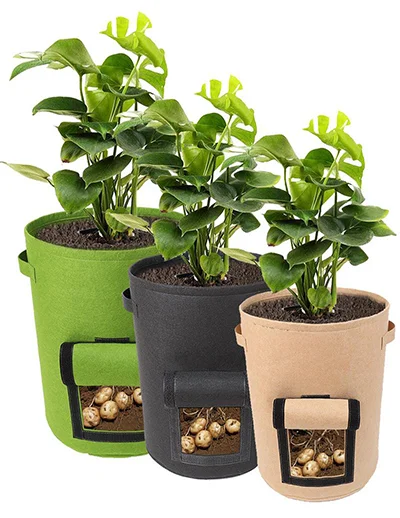
Growing Bags: The Smart Way to Grow Food Anywhere
From balcony tomatoes to rooftop herbs, fabric grow bags let you control soil, water and position independently — with n…
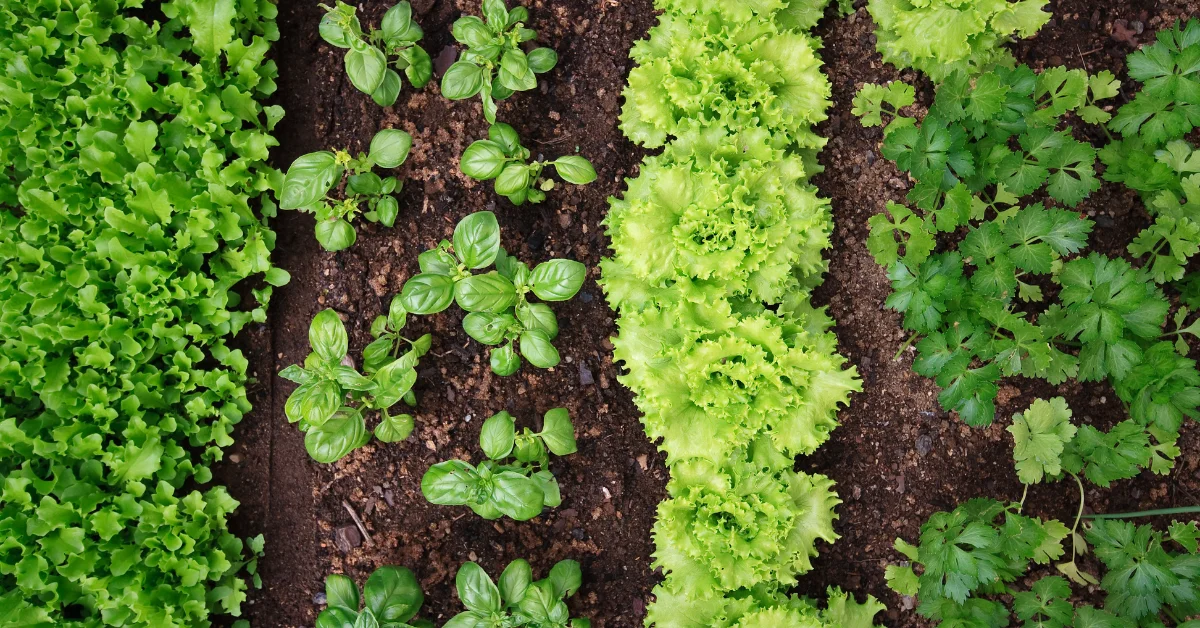
5 Tips to Keep Growing Vegetables When You Feel Like Quitting
Common frustrations in home vegetable growing — and practical adjustments that turn failures into a productive, enjoyabl…
What is Aquaponics? Growing Fish and Vegetables Together
Aquaponics uses up to 90% less water than soil agriculture — fish waste feeds the plants, plants clean the water, and bo…