
Why people stop growing vegetables
Home vegetable growing has a high dropout rate. People start with enthusiasm in spring, encounter a failure — seeds that do not germinate, plants eaten by pests, a harvest too small to feel worthwhile — and conclude that growing vegetables is either too difficult or not worth the effort. The activity that was supposed to be enjoyable becomes a source of guilt about neglected plants.
The dropout pattern is almost never caused by genuine inability. It is caused by a mismatch between expectation and reality: expecting a productive vegetable garden from the start, without the accumulated knowledge of what works in their specific location. Professional growers lose crops regularly. The difference is that they have calibrated their expectations and their methods to their conditions.
Tip 1: start with the right crops for Israeli conditions
Not all vegetables are equally forgiving. In the Israeli climate — hot summers, mild winters, high solar intensity and variable water availability — some crops succeed reliably without specialist knowledge. Cherry tomatoes, basil, rocket (arugula), courgettes, chard and fresh herbs like mint and parsley are among the most resilient. These crops tolerate heat, produce over an extended season and recover from missed waterings better than others.
Crops that struggle for beginners in Israel include lettuce in summer (bolts quickly in heat), cauliflower and broccoli (require consistent cool temperatures), and corn (needs significant space and pollination management). Starting with reliable producers builds confidence and knowledge before attempting more demanding varieties.
Tip 2: match your system to your actual schedule
A vegetable garden that requires daily attention will fail for anyone with an unpredictable schedule. Drip irrigation on a timer — inexpensive to install and available in kit form — removes the single most common cause of plant death: inconsistent watering. Mulching around plants reduces water loss through evaporation, moderates soil temperature and suppresses weeds, reducing maintenance frequency significantly.
The goal is a system that can survive a long weekend without water and still produce. Container growing on a balcony with a timer-controlled drip system is more reliable than a ground bed that depends on daily hand-watering. Match the investment in system design to the time you realistically have, not the time you aspire to have.
Tip 3: understand shemita and seasonal timing
For Jewish growers in Israel, shemita — the agricultural sabbatical year observed every seven years — adds a religious dimension to vegetable growing. During a shemita year, working the soil and cultivating crops carry specific halachic requirements and restrictions. Many religious growers shift to container growing during shemita years, which is generally permitted, or to acquiring produce through approved channels.
Beyond shemita, Israeli vegetable gardening follows two distinct growing seasons: the winter season (sowing from September–November for harvest through April) and the summer season (sowing from March–April for harvest through autumn). Understanding this cycle — and planning sowings accordingly — prevents the common mistake of sowing warm-season crops too late in autumn or expecting summer harvests from seeds sown in midsummer heat.
Tip 4: grow vertically to maximize small spaces
Many Israeli vegetable growers work with balcony space rather than gardens. Vertical growing — trellises, stake systems, hanging containers and wall-mounted planters — dramatically increases yield per square metre. Cucumbers, beans, peas, cherry tomatoes and small melons all climb naturally with minimal support. A single square metre of balcony floor, extended vertically two metres, can produce the equivalent harvest of four square metres of ground bed.
Container selection matters for vertical systems: deep containers (minimum 30 cm) for tomatoes and cucumbers, shallower ones for herbs and salad leaves. Grouping containers in a sheltered corner reduces wind stress and water demand. Using potting mix rather than garden soil prevents the compaction and drainage problems that kill container-grown vegetables.
Tip 5: treat every season as a learning experiment
The growers who persist are those who have reframed failure as data rather than judgment. A crop that fails in one location, one season or with one method provides information that improves the next attempt. Keeping a simple growing log — what was planted, when, what happened — is more valuable than any book on vegetable growing because it reflects your specific conditions.
Community knowledge also accelerates the learning curve considerably. Local gardening groups, urban farming networks and neighbourhood seed exchanges give access to the accumulated experience of growers who have already learned what works in your area. In Israel, a growing community of balcony farmers and urban agriculture practitioners share knowledge openly. Finding this community — online or locally — may be the single most effective step for someone who has tried and stopped.
Related Articles
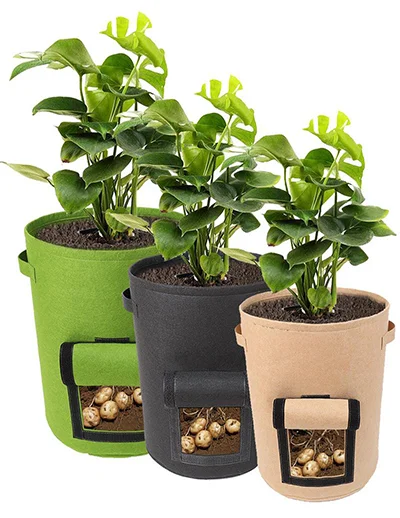
Growing Bags: The Smart Way to Grow Food Anywhere
From balcony tomatoes to rooftop herbs, fabric grow bags let you control soil, water and position independently — with n…
Community Agriculture: Growing Together
CSA schemes, urban allotments and food co-operatives shorten supply chains, build food resilience and reconnect urban re…
What is Aquaponics? Growing Fish and Vegetables Together
Aquaponics uses up to 90% less water than soil agriculture — fish waste feeds the plants, plants clean the water, and bo…